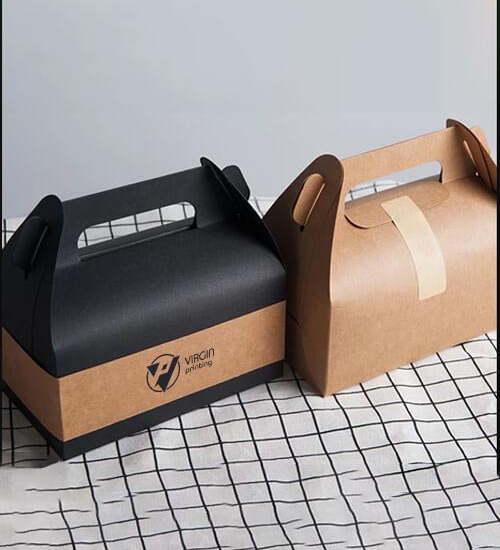


Structured Packaging Custom Donut Boxes
Custom Donut Boxes that have been designed to contain product, stability and accuracy in packaging during bakery distribution systems.
Custom Donut Boxes are specifically designed packaging tools to package, separate and transport donuts in a unified and stable fashion. These boxes are concerned with internal spacing, alignment of the lid and material strength to ensure the protection of the product shape during handling. Box engineering helps to avoid compressing and sliding within the container.
Custom formats enable dimension, insert layout and closure system to be adjusted to meet production requirements. Donut packaging has to be designed in a controlled way, whether in single or multi-piece units. This article describes structural planning, material choice, display characteristics and processes of production that constitute professional donut packaging systems.
Structural Design Planning
The preparation of structural planning starts with the accurate measurement of the donut diameter and height. The internal arrangement should provide sufficient clearance between items to prevent collisions with each other. The thickness of the board is also chosen such that it will not be bent in order to be stacked. This step is necessary in the custom donut packaging boxes systems, which need repeatable structural performance. Before the production process starts, engineers will design fold lines, base reinforcement and lid alignment. The templates are used to guarantee uniform panel sizes. Structural accuracy maintains the contents in the container until the time of storage and distribution.
Printed Surface Layout
Surface design enables product information and branding features to be visible on the box panels. Layout planning determines the points of intersection of text, graphics and structural folds. The matching of artwork with cut lines reduces distortion when assembling. The method is also popular with custom printed boxes on donuts, where the surface is required to be clear on the outside, and satisfy the same requirement once folded. The choice of printing techniques depends on the texture of the material and the volume of production. The placement of inks should not be disruptive to areas of closure. Complete registration provides proper visual alignment of all units.
Internal Compartment Systems
Certain donut setups have to be divided to avoid contact on the surface. The box is separated into structured parts with the help of internal dividers. These have compartments that are adjusted to donut spacing requirements. This design allows bespoke donut packaging in which the stability of the products is emphasized. The inserts may be attached to the base or may be in the form of removable trays. The internal system should be able to fit firmly without compressing the product. Compart sizing ensures the order is transported. The interior is designed to enhance a controlled position within the box.
Window Display Integration
Clear containers can be transparent and can be viewed without having to open the container. The position of windows should not disorient structural folds and lid seams. A reinforcement is done to the cut area to ensure that the boards remain strong. The format is mostly common in donut boxes whose windows are designed in a manner that necessitates controlled exposure of the products. The motion picture is held on the panel aperture to safeguard the contents. The size of the windows is computed about the donut arrangement. Adequate alignment will make the visible space a reflection of the internal structure. This system balances entrapment and orderly sightseeing.
Logo Placement Strategy
Brand identification may be mounted at the top of center panels, side walls, or on the lid. Box orientation should be taken into account on display in a logo. Defined positioning makes it visible in storage and display spaces. In a large number of brands, the usage of donut boxes with logo structures is implemented to ensure they place their identities in an orderly manner. The creation of the logo area is intended as a template to avoid overlapping with the folds. Proper spacing prevents seam distortion. The box architecture is structured branding and not an addition to it.
Whole Sale Production Systems
Mass production will need standardized dimensions and repeatability in the accuracy of the fold. Production templates are standardized in order to ensure the standardization of production across batches. Board sheets are cut on the basis of approved die designs. This is what makes the donut boxes wholesale business central in terms of its structure uniformity. Quality control checks the fold position and precision of lid closure. Bulk production also provides the same panel geometry between units. Variable control manufacturing minimizes dimensional variation. Wholesale systems have steady structural performance within each box.
Packaging Assembly Workflow
The first step in assembly is scoring along facades. The base and lid are constructed by folding panels. In the event that it has a locking mechanism, it needs to align appropriately when closing it. This workflow helps to have efficient processing in the packaging assembly of donut boxes. The folding instructions are clear, and the result is a minimal amount of errors during assembly. Folding and gluing are also possible when automated equipment can be used. The right coordination of the workflow will guarantee the same structural output. All units finished are inspected on alignment before distribution.
Individualized Structural Options
Customization can also be used to adjust size, depth and interior layout to suit product needs. Structural changes can consist of variations in compartments or changes to the heights of the lids. The design teams consider the amount and placement of donuts and then make final decisions about dimensions. This will help in the promotion of customized boxes of donuts in terms of product configuration. Dimensional planning is the way to correctly fit within the container. Fold integrity is not lost as a result of structural adaptation. Personalized engineering ensures that the packaging remains in tandem with the production requirements. Every customization is geometry- and functionality-centred.
Selection of material Strength
The choice of board grade has an effect on rigidity and folding. The material should be able to sustain lid pressure and stacking conditions. Scoring should not crack when scoring is done on the surface. Material planning is one of the key elements in the design processes of custom donut boxes. The amount of thickness is determined depending on the weight of the product and the conditions of transportation. Strengthened edges enhance compressive strength. Effective board selection will make the panels stable. Proper material specification is required for structural durability.
Precision Control of Production
Die-cut technology forms panels, flaps, and openings of windows with precision. Computerized templates are used to control cutting devices on the production line. Scoring depth should not be so deep that it tears fibres. This accuracy is vital in systems where special donut wrappings are used in order to achieve a uniform production. Closure panels can be checked to ensure that they fit. Any changes are corrected in case of realignment in the process of manufacturing. Controlled production is used in order to have repeatable box sizes in all batches. Reliability is through the accuracy in the behaviour of the structures.
Storage and Handling Stability
Boxes have to be stable when transporting and stacking. Lid reinforcement and base reinforcement hinder pressure deformation. Internal spacing provides security to the donuts in the container. Stability testing is used to test compression and vibration resistance. The process is beneficial in terms of professional performance in the packaging of donut boxes. Correct balance of structure eliminates shifting movement. Secure closure is a method of keeping panels straight until opened. The stability issue is also a central demand of the donut packaging systems.
Efficiency Design on Distribution
The size of the packaging has to align with the transport trays and shelves. The same size makes it easier to stack in distribution. Lid alignment ensures that it is not opened accidentally as it moves. Effective layout planning facilitates systematized management of the chain of supply. Custom Boxes With Logo These principles are applicable to designed systems like a donut box with a window format, which are used in a retail setting. Constant geometry enhances external compatibility. Correct sizing guarantees controlled placement within the units of transport. Design Distribution-ready design will aid predictable packaging performance.
Conclusion
Custom Donut Boxes offer organized hold, spacing and regulated closure mechanisms that are tailored to donuts. By means of selective materials, correct folding templates and designed compartments, the boxes retain the product alignment in handling and distribution. The window, logos and inserts are features that are incorporated in the structure design. Wholesale production, customized layouts, all of them are aimed at dimensional consistency and precision. Designed correctly, custom donut packaging is beneficial to facilitate structured storage, standardized presentation, and dependability in retail and transport areas.